






Beauregard Volunteer Fire Department conducts specialized training
The Beauregard Volunteer Fire Department conducted a specialized training Monday night.
The training – held by the department’s Capt. Wes Jones, Lt. Austin Jones, and Lt. Destry Harrison – covered chainsaw operations, winch operations, and how to operate brush trucks.
Brush trucks have been deployed several times over the past several weeks, after fires broke out in several areas of the community.
Inside The Training
At the beginning of training, volunteer firefighters were able to identify how to start operations on a fire scene using the equipment, the motor, and the hose.
Capt. Wes Jones shows two volunteers firefighters how to start the motor on a brush truck at training on Monday, Feb. 23, 2026. (Image/Colin Scroggins)
Firefighters also were taught how to properly complete pump operations and hose deployment, along with maneuvering techniques in rough terrain.
During the next step of training, volunteer firefighters practiced safe cutting techniques used in storm damage cleanup. Lt. Harrison discussed the techniques, along with equipment maintenance, hazard assessment and proper protective gear to reduce injury risks.
Lt. Destry Harrison begins discussing to a crowd of firefighters how to safely operate a chainsaw at training on Monday, Feb. 23, 2026. (Image/Colin Scroggins)
At the end of the training, volunteer firefighters learned how to operate winches safely. Crews were taught how to rig cables, calculate load capacities, and operate hydraulic and electric winch systems during rescues involving debris removal.
Several volunteer firefighters putting training to action during winch operations at station one on Monday, Feb. 23, 2026. (Image/Colin Scroggins)
Also discussed during this section of the training, fire apparatus placement to ensure safety of all personnel, equipment and apparatus.
Training’s Impact on the Firefighters
Most departments train weekly, bi-weekly, or monthly. At Beauregard, volunteer firefighters are conducting training every second and fourth Monday of each month to prepare for any possible scenario.
While their trainings may look routine, department leaders say the goal of the training isn’t perfection.
Beauregard Fire Chief Mike Holden overlooks training, watches firefighters operating tools on Monday, Feb. 23, 2026. (Image/Colin Scroggins)
“Training is not about learning to get it right,” Chief Mike Holden, a 30-year member of the department, said to his firefighters. “Training is about learning to not get it wrong.”
In emergency response, officials say, nothing ever goes exactly as planned such as equipment malfunctioning, conditions changing, or routine calls quickly becoming a serious and life-threatening situation.
During the training, department leaders and firefighters intentionally create room for mistakes during training so members can identify problems and fix them before lives depend on it.
Firefighter Kathryn Jolley operates chainsaw at training on Monday, Feb. 23, 2026. (Image/Colin Scroggins)
“You train to learn how to use your equipment and learn how to do your procedures safely,” Assistant Fire Chief John McCracken said. “But you also learn what to do when things go wrong.”
McCracken asked firefighters during their training, “how many times do things go 100% perfectly right on a call?”
“Never,” every firefighter replied.
911 Calls and the Community
That preparation and training becomes especially important during calls, some of which can be overnight.
Firefighters stand at the back of a brush truck during training operations on Monday, Feb. 23, 2026. (Image/Colin Scroggins)
“At two o’clock in the morning, you’re still halfway asleep,” Capt. Jones said. “That’s when muscle memory takes over.”
Firefighters described how tasks like pulling the correct lever on a pump, connecting hose lines properly, or setting up equipment can take seconds when done right, but minutes when done wrong. In an emergency, those minutes matter.
Department leaders say that’s why every drill begins with the basics.
Lt. Harrison shows firefighters how to safely complete chainsaw operations before beginning cutting practicing on Monday, Feb. 23, 2026. (Image/Colin Scroggins)
“We focus on foundational skills,” Lt. Jones said. “This is the tool. This is how it works. This is our baseline. Then we build from there.”
Department leaders said that no two calls are ever the same.
Whether responding to a structure fire, medical emergency, or rescue situation, crews must be prepared to adjust strategies while keeping the same end goal: put the fire out, treat the patient, and prevent the situation from getting worse.
“Something has already gone wrong for someone when they call us,” firefighter Thomas Roach said. “We don’t want to make it worse.”
Brush truck equipment used during brush or structure fires shown at training on Monday, Feb. 23, 2026 (Image/Colin Scroggins)
That mindset across the whole department extends beyond high-profile emergencies. Members said that frequent calls to the same address can sometimes feel routine, but experience has shown them that even a familiar situation can suddenly turn serious.
“The call that feels routine to us may be life-changing for them,” one firefighter said. “So we respond the same way every time.”
While residents often only see the department when running calls with flashing lights and sirens, leaders say the unseen hours of preparation are what truly protect the community.
“The majority of the time, the only time the community thinks about us is when we’re knocking on their door,” Chief Holden said. “But what they don’t see is the training.”
Firefighters begin cutting practicing using a chainsaw at training on Monday, Feb. 23, 2026. (Image/Colin Scroggins)
Through structured schedules, hands-on drills, and constant evaluation, the Beauregard Volunteer Fire Department says it is committed to sharpening skills, improving safety, and maintaining readiness for whatever comes next.
That training and preparation will come into play anytime a call comes in and the fire tone drops.
Related stories
 WeatherAlabama Fire Departments deploying Fire and Water Rescue teams to Gulf Coast ahead of Hurricane Isaias
 WeatherLightning strike causes grass fire at Wacoochee Elementary School
 WeatherLightning strike sparks fire at horse stable in Crawford
 SafetyOpelika Fire Department equips all 90 firefighters with new communication-enhanced masks
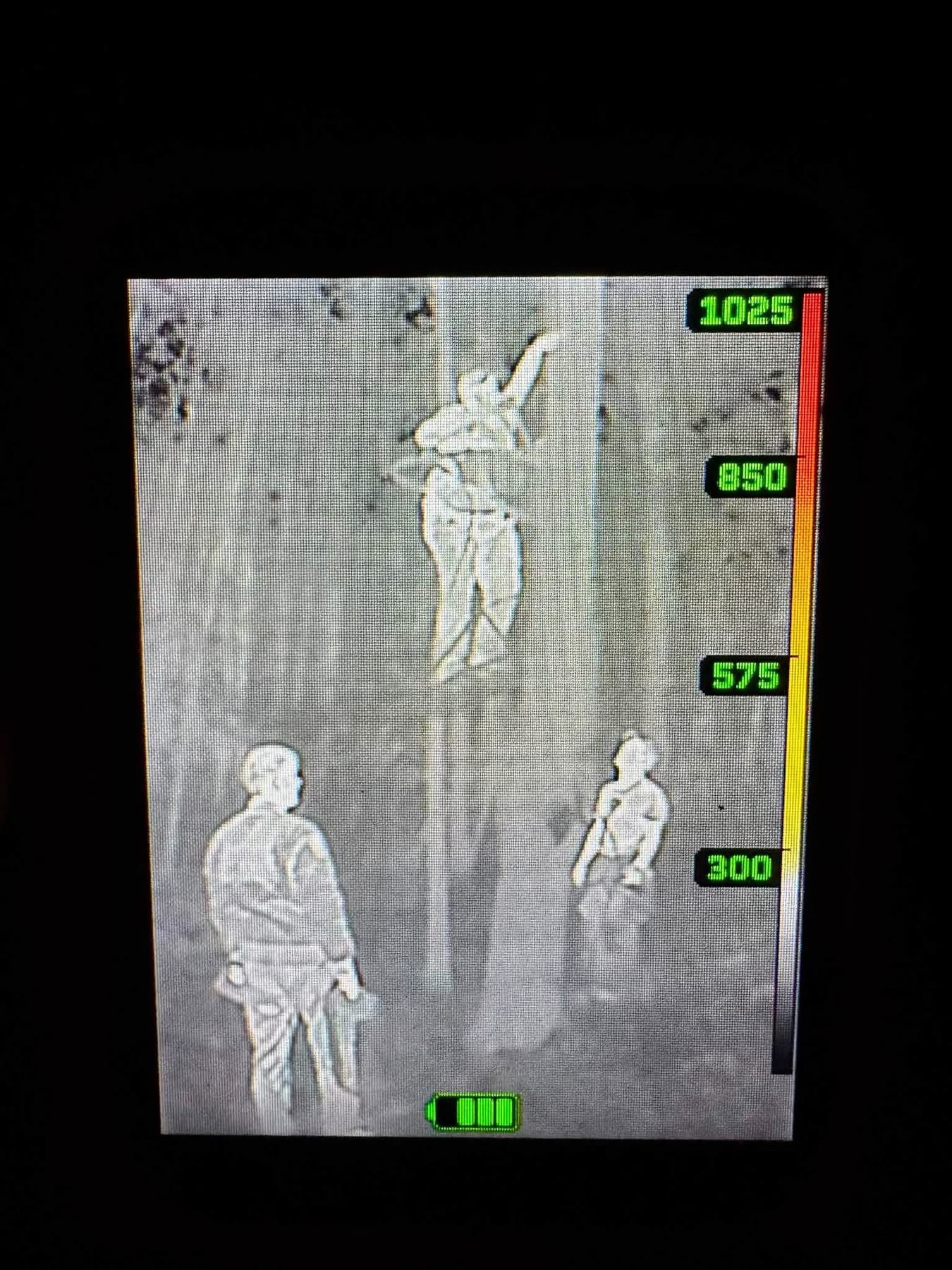 SafetyHunter rescued from tree after tree stand malfunction in Tuskegee National Forest