






Starting October 1: Vaping to face same indoor restrictions as smoking in Alabama
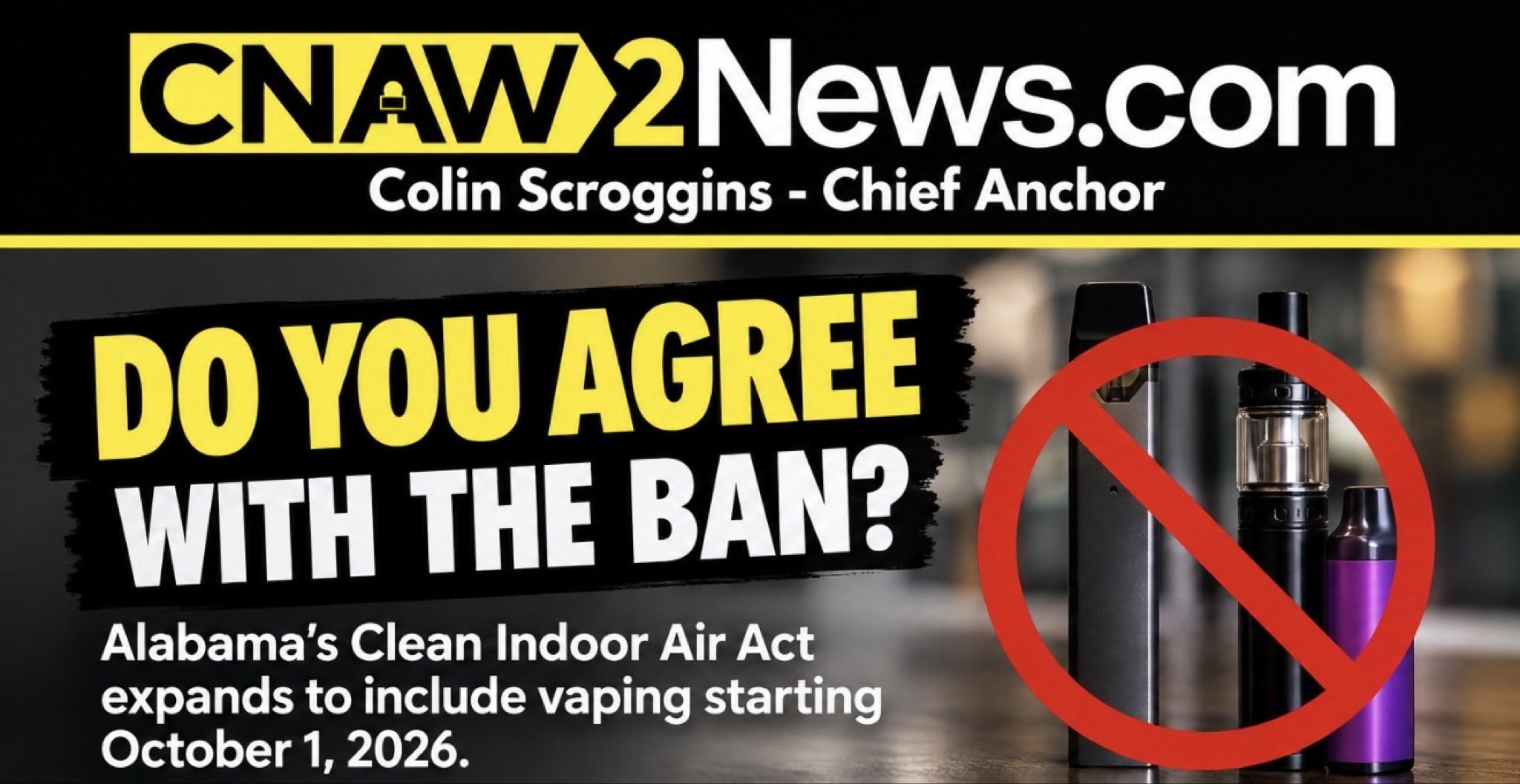
Beginning October 1, 2026, Alabama’s Clean Indoor Air Act will expand to include electronic nicotine delivery systems, meaning vaping and the use of e-cigarettes will be subject to the same indoor restrictions as smoking tobacco products.
Senate Bill 9, sponsored by State Sen. Gerald Allen, was signed into law as Act 2026-505. The legislation amends Alabama’s Clean Indoor Air Act to include the use of an electronic nicotine delivery system in the definition of “smoking.”
The law also renames the act the Vivian Davis Figures and Barbara Drummond Clean Indoor Air Act.
Under the updated law, wherever the Clean Indoor Air Act prohibits smoking, those restrictions will also apply to vaping and the use of electronic nicotine delivery systems.
The restrictions apply to enclosed public places, including auditoriums, elevators, hospitals, nursing homes, libraries, courtrooms, jury waiting and deliberation rooms, theaters, museums, common areas of retirement homes, restaurants, laundromats, health facilities, educational facilities, shopping malls, government buildings, sports and recreational facilities, places of employment, airports, banks, retail stores and service establishments.
Private residences are not considered public places under the act and are not covered by the new restrictions.
Alabama State Health Officer Dr. Scott Harris said the change is intended to strengthen protections against exposure to tobacco smoke and substances associated with vaping in indoor public spaces.
“Creating healthier environments where Alabamians live, work, and gather is an important part of protecting public health,” Harris said. “Reducing exposure to tobacco smoke and harmful chemicals from vaping in indoor public spaces is an important step toward protecting the health and well-being of Alabamians.”
The Alabama Department of Public Health is encouraging businesses and organizations covered by the Clean Indoor Air Act to review their current smoking policies and make any necessary updates before October 1.
ADPH also encourages electronic nicotine delivery system users to familiarize themselves with the new requirements and follow posted no-smoking policies at locations covered by the law.
What changes October 1?
Under Act 2026-505:
• Electronic nicotine delivery systems will be included in the definition of “smoking” under Alabama’s Clean Indoor Air Act. • Existing indoor smoking bans covered by the act will also prohibit vaping and the use of electronic nicotine delivery systems. • Businesses and organizations covered by the law should ensure their smoking policies and signage accurately reflect the updated requirements. • The law does not prohibit the use of electronic nicotine delivery systems in private residences.
Sen. Allen said the legislation brings electronic nicotine delivery systems under the same protections that have applied to tobacco smoking in indoor public spaces.
“Alabama has long recognized the importance of protecting people from exposure to tobacco smoke in indoor public spaces,” Allen said. “This law brings electronic nicotine delivery systems under those same protections.”
Rep. Barbara Drummond also expressed support for the legislation, citing public health concerns associated with vaping and nicotine addiction.
“Vaping poses serious concerns for public health, particularly for our young people,” Drummond said. “While the long-term health effects of vaping continue to be studied, we know enough to recognize the risks associated with nicotine addiction and exposure to harmful substances.”
The updated Clean Indoor Air Act takes effect October 1, 2026.
Related stories
 LocalStarting October 1: Vaping to face same indoor restrictions as smoking in Alabama
 LocalLee County Sheriff Jay Jones alleges Alabama GOP Chairman threatened removal over candidate endorsement
 LocalBREAKING: Alabama Power, Georgia Power customer accounts accessed in cybersecurity incident
 LocalHope Harbour raises awareness of domestic violence throughout October
 LocalFree mammograms offered to uninsured women in East Alabama